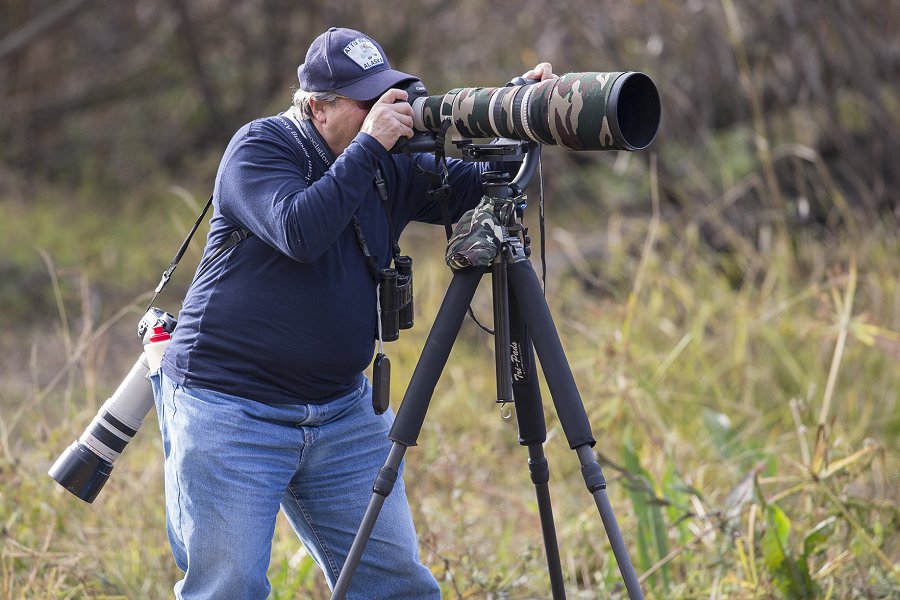
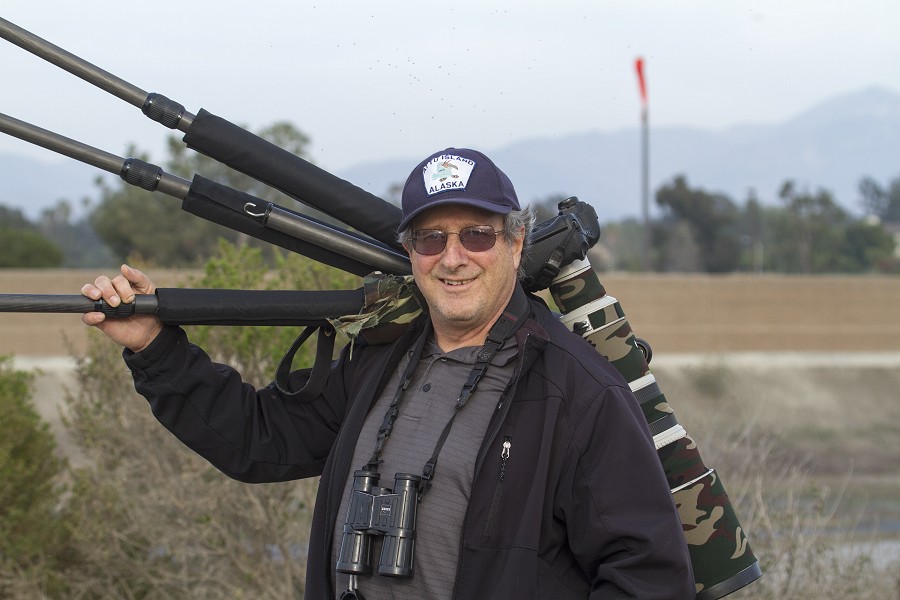
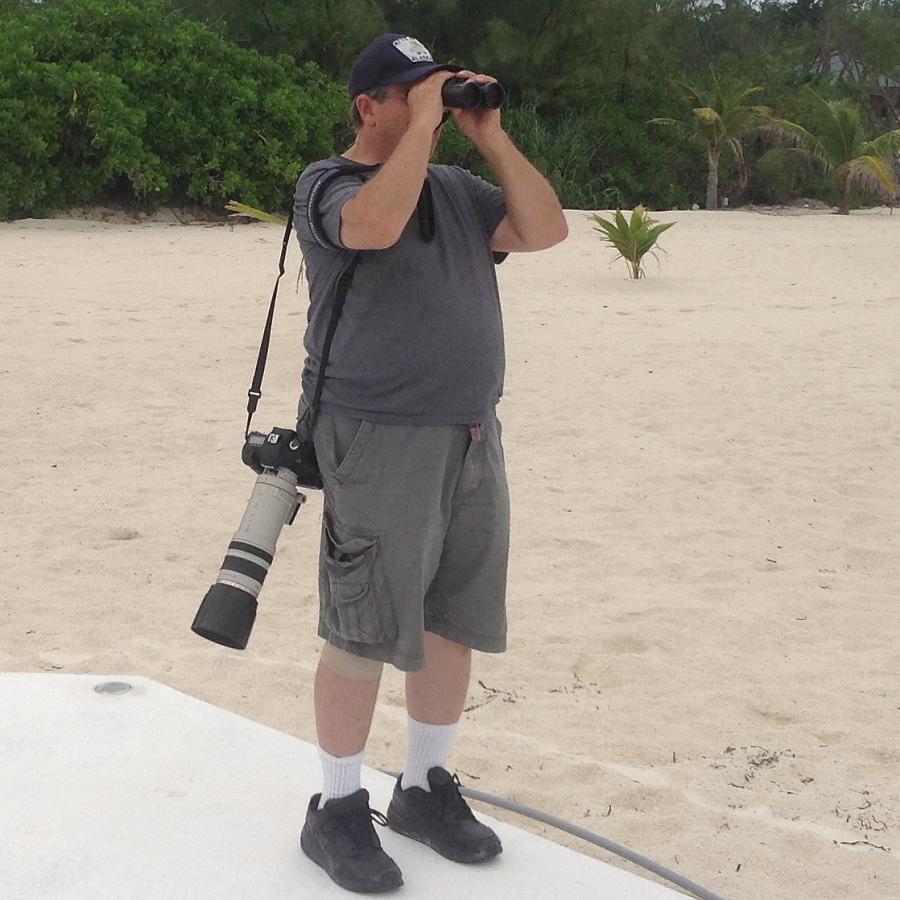
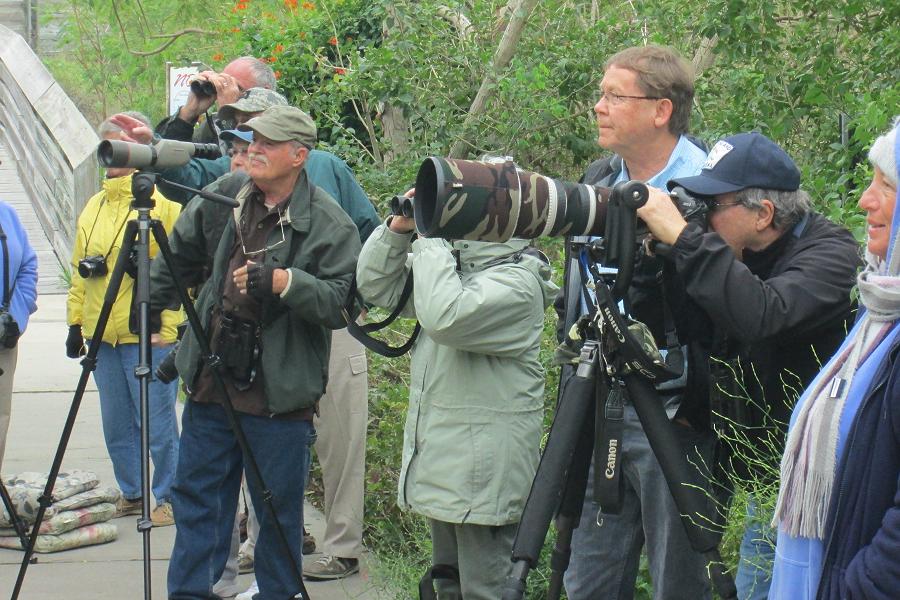
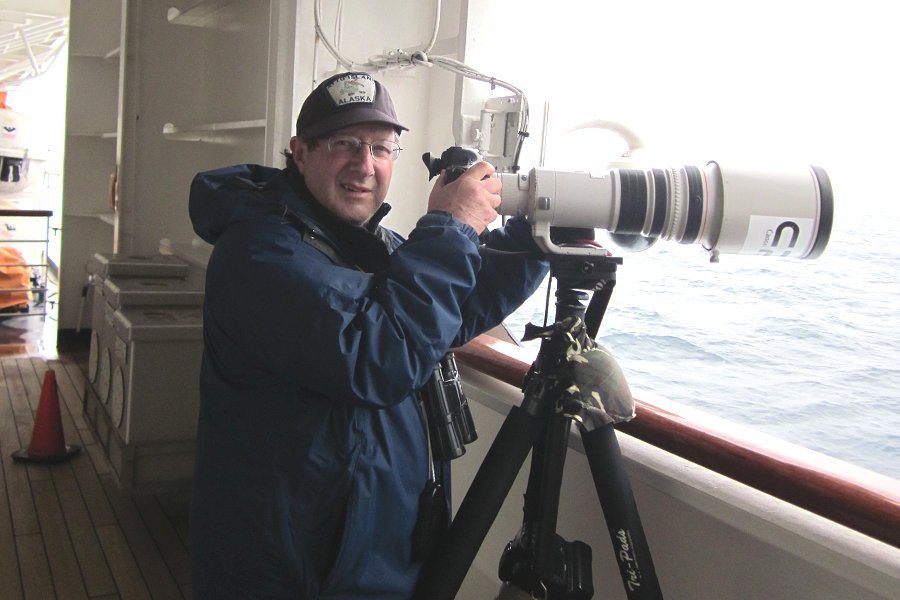
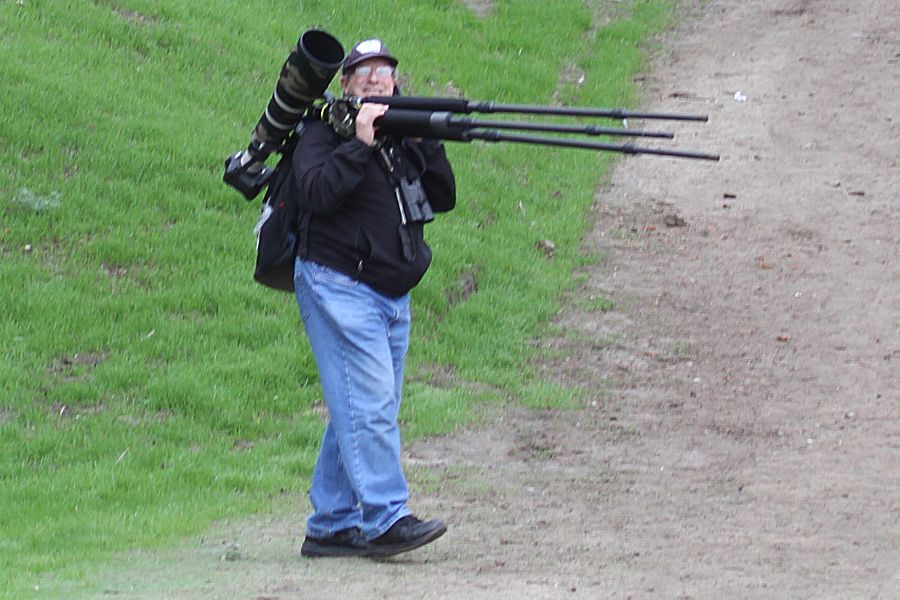
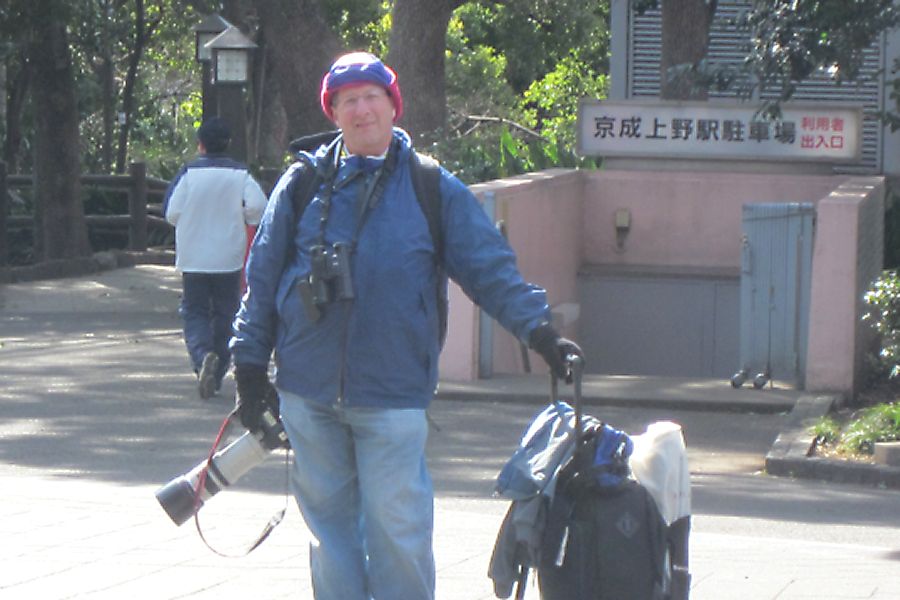
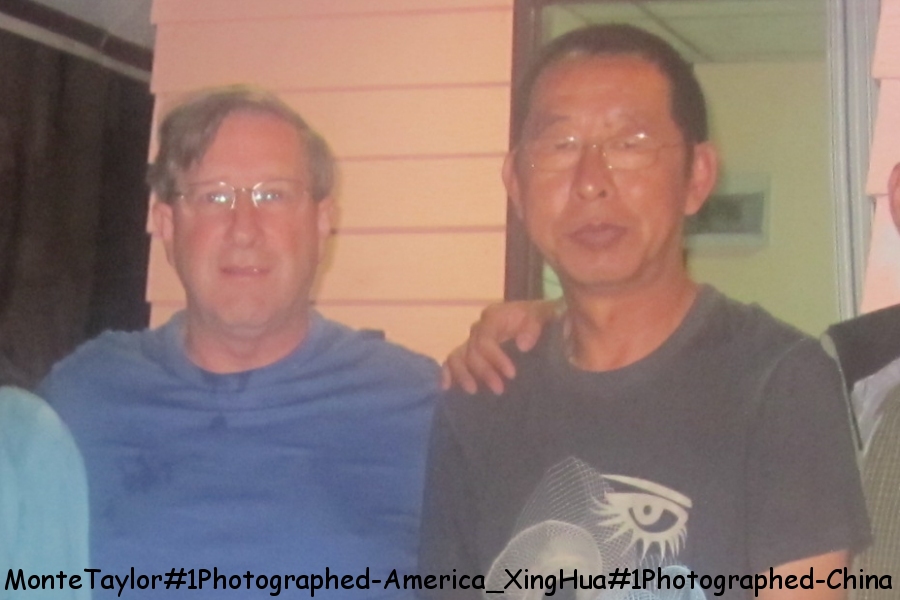
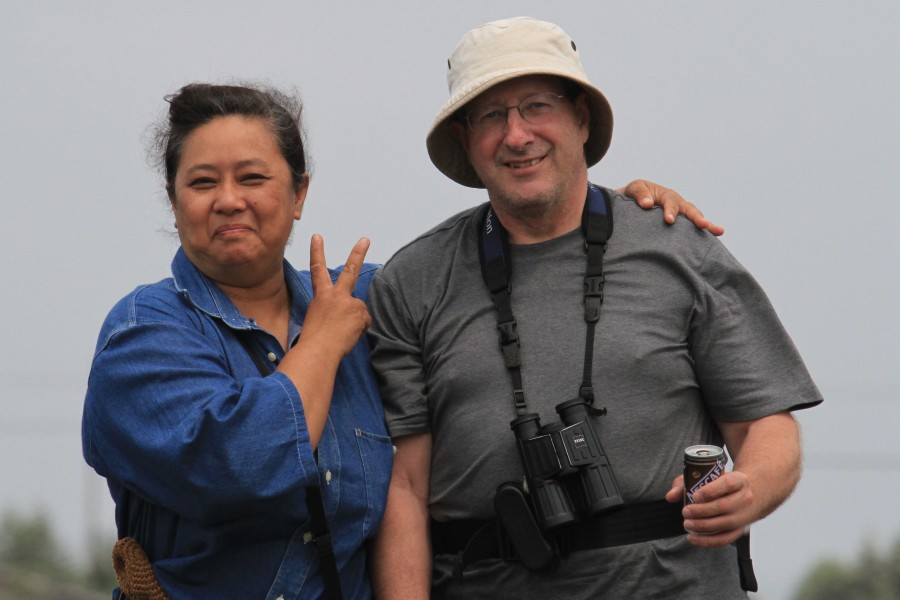
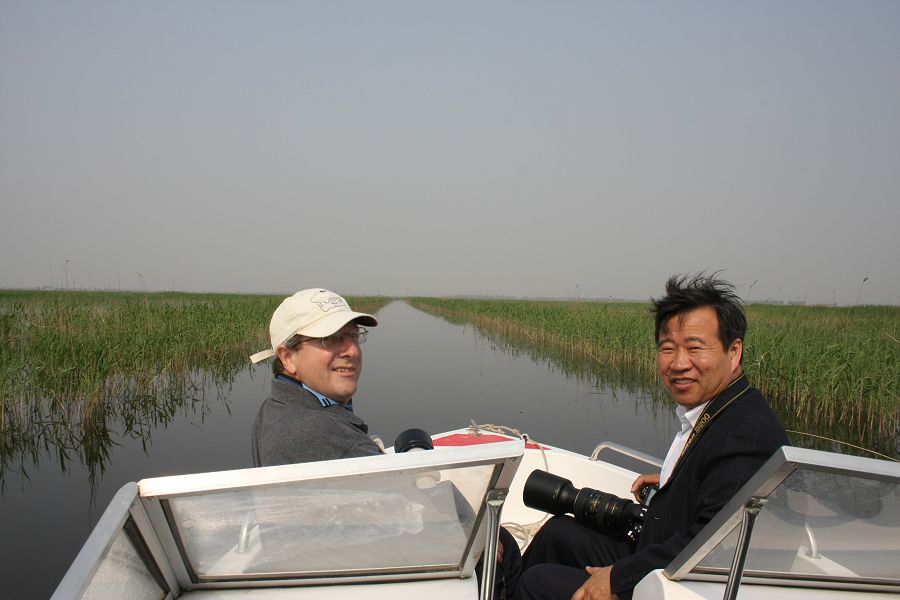
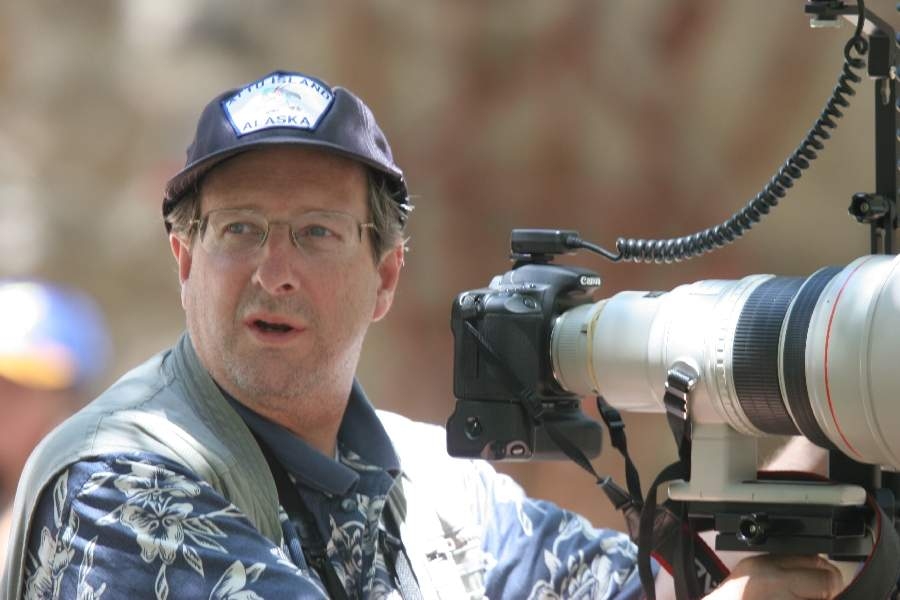
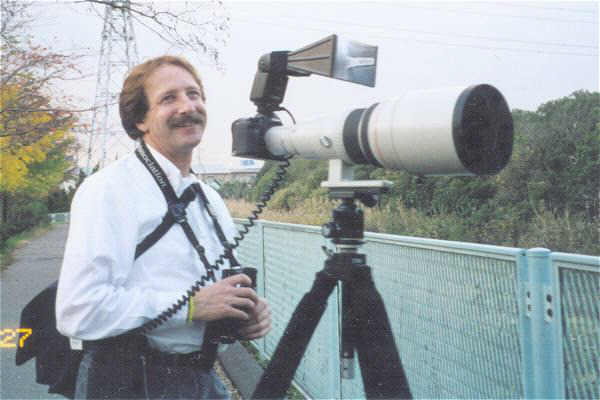
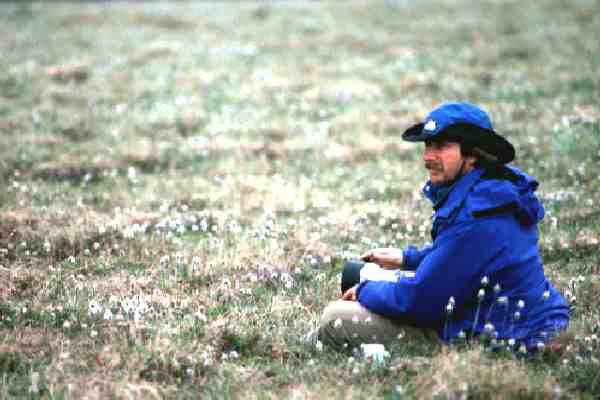
ALL images are by the photographer above (free, wild, & unrestrained)
05/2026
-- Over 70,000 stock slide images available --
-- Over 1,000,000 stock digital images available --
- Over 958 Bird Species Photographed in North America -the ABA- (including
Hawai'i) - Seen 978
Over 919 Bird Species Photographed in North America -the ABA- (not including
Hawai'i) - Seen 927
- Over 2,200 Species Photographed in the World -
- Now over 31,000 individual images already on this website -
-
Please ask if you are
looking for a particular species image (of anything)
as at this moment
there are literally thousands of images to be readied for the
website
ALL PHOTOGRAPHS ARE
Totally wild, unrestrained, and established and accepted species.
NO "ZOO" Birds as some seem to photograph and count!!
Nor escaped cage birds nor any Old McDonald's Farm birds like many eBird listers
count!
There are images of some of these for reference ONLY, and stated as such, but not counted on my
personal list
For those wanting to have a true and honest list that are
scrutinized by the American Birding Association and the American Ornithological
Society
go to those sources to find species that are truly countable
American Birding Association
American Ornithological Society
not
eBird where you can put anything on your list and be counted!




|
|
Monte Taylor is a Canon Professional
Photographer. He began his interest in birds and nature at the tender
age of 9 years. That interest grew into wildlife photography which he
has pursued now for over 66 years. His images have been published in National Geographic, National Audubon Society Books, Smithsonian magazine, Nature Conservancy magazine, numerous Field Guides, Birding magazine, Western Birds magazine, and numerous other books, magazines, periodicals internationally, CD's, DVD's, and research papers over the last 50 years. His accomplishments include photographing nearly all (over 900 species) of the expected bird species, including many of the rarest, in North America, over 938 if including Hawai'i. To that he has added many of the large mammals, cetaceans, and sea mammals and expanded into species from North America, the Bahamas, Japan, China. Hong Kong, Thailand, and east Asia. He has also been in the number one position on the most photographed birds in the American Birding Association area (North America) for the last several years. At present he has well over 1 million slides and digital stock images of these species (and sub-species) in different poses, age groups, and activities. His travels have taken him to each state and province on the North American continent, north of Mexico (and Mexico as well), including many trips to Japan, China, Hong Kong, Thailand, and eastern Asia, Central America, and South America along with the Bahamas. Over the last 75 years have lived in 13 states and 2 foreign countries. His most favorite places are Alaska (most favorite), California, southeastern Arizona, Florida, Ohio, Texas, British Columbia, Ontario, Nova Scotia, and Newfoundland, Canada, Japan, China, Hong Kong, Thailand, Costa Rica, and Ecuador. http://www.tsuru-bird.net (Bird and Mammal Website - including Cetaceans and Others from North America, the Bahamas, Japan, Hong Kong, Thailand, China, Costa Rica, and Ecuador) http://www.tsuru-bird.net/image.htm (Individual Species list / links) Camera Equipment Canon R5 Mirrorless (not impressed whatsoever with this body! If you shoot still subjects maybe you think it's great, for wildlife it SUCKS!!!!!!!!!) Canon 1DX Mark II Body (Digital) - two Canon 7D Mark II Body (Digital) - two Canon EOS 1N Body (35 mm film) - packed away for longevity Canon 800mm / f 5.6 L USM Lens Canon 600 mm / f 4.0 L USM Lens Canon 500 mm / f 4.0 L IS USM Lens Canon 400 mm / f 2.8 L USM Lens Canon 400 mm / f4 DO L IS USM Lens Canon 300 mm / f 2.8 L USM Lens Canon 100mm-400mm Mark II / f4.5-5.6 L IS USM Lens Canon 70mm-300mm / f4-5.6 L IS USM Lens Canon 28mm - 135mm Lens Gitzo carbon-fiber Tripod Wimberley Gimbal Tripod Head II EX-580 / EX-580 II / EX-550EX II flash systems and hardware + Canon 1.4x II, 2.0x II, EF-25 Extension Tubes ** (Still have my Canon EOS 1n film body) Photo Credits - Published Articles / Images - 'National Geographic' books - 'National Audubon Society' Field Guides -'Smithsonian' Magazines -'Nature Conservancy' Magazines - American Birding Association 'Birding' Magazines - American Birding Association "WingingIt" Periodicals - 'American Birds' Magazines - 'Western Birds' Magazines - 'Kaufman Birding Series Field Guides' books - 'Peter Thayer's Birders Diary' CD - Birds of Prey Field Guide - Better Birding - Peterson Woodpeckers of North America - Guide to the Birds of Alaska by George West - National Geographic Birds of North America - Birds of Prey of the West Field Guide - Birds of the Garden - eNature (enature.com) - Smithsonian Institute videos - BioDiversity Institute (bdi.org) - Guia de Aves Reserva de La Biosfera La Michilia - Oriental Bird Images (orientalbirdimages.org) - Adventure Publications books - Roadrunner (Swedish Birding) - Wikipedia.com Online Encyclopedia Website and, numerous other books, DVDs, CDs, magazines, research papers, wildlife area posters, and educational publications - NEW - Feature Article in SURFBIRDS.COM Go to: www.surfbirds.com/mb/Features/800-birds.html UNFORTUNATELY Surfbirds.com has been taken down supposed due to funding for them as it was a great website for birders! |
|
|
|
||

after photographing the
Gunnison Sage-Grouse after multiple trips having no luck - got photo's
before daybreak 200+ yards out
Copyright
©
1996-2026
Monte M. Taylor / All Rights Reserved. 36 USC 380
The Contents and Graphics were created by and copyright
owned
by Monte M. Taylor. The Contents and Graphics may NOT
be used on another website, for email attachments,
chat sessions, clipart collections, or by any other
means unless otherwise stated or written
permission was granted by me.
More About The Photographers
Monte :
| My interest in nature, birds, mammals, and photography also started at the age of 9. I've always been fascinated by the brilliant colors of many of our countries song birds and the variety and geographical differences in habitat that North America offers. This has also been a 'magnet' for me - to travel to many of the far reaching points on this continent in search of some of the rarest species. And other continents as well. For those who are keenly interested in the birds of North America, there has grown a large group of individuals whose challenge has been to 'see' as many of the species found in the United States. I fell into this group and its interest and took it another step further by trying not only to see as many of the species in the U.S. but also to photograph them as well. I've also had a special interest in the birds and animals of Japan and have spent some time photographing the species there in the "land of the rising sun" and then on to China, Hong Kong, Thailand, Central America, and South America. |
For those interested in the photo equipment utilized a somewhat brief summary follows: |
| At age 6, I started with one of those old Kodak Brownie cameras (if anyone out there is old enough to remember that camera!) and by 14 had graduated to my first 35mm camera - a Minolta SRT-101. In its day it was a decent camera, and because once you choose a camera body the lenses follow. My first 'big' lens was a Vivitar 120-600mm with a f5.6 aperture speed. Believe it or not, a few hand held shots with that lens still exist on the web site. But, once the seriousness of getting sharp images became more of a priority, I finally broke down and bought a Minolta 9000 and an 8000i body along with a 300mm f2.8 APO lens. That satisfied the sharpness requirement for the next several years and allowed me to get some decent shots that ended up in many magazines and books. However, I found the Minolta system too slow. Yep, the "fast" auto-focus Minolta lenses seemed to be more accustomed to focusing at a snails pace it seemed and after looking at the Canon EOS-1 body and lenses I decided right then and there (after missing so many photo ops due to slow focusing) to switch to the Canon system. (Now I shoot with Canon 1DX Mark II and 7D Mark II bodies along with the lenses mentioned below) |
| Well, for those of you who know the kinds of dollars we're speaking
of here, that was no simple and inexpensive decision! But, in the sake of getting shots the credit card came
out of the wallet and now the system is comprised of both an 1DX Mark II
and 7D Mark II bodies, (and stored away
an EOS-1n body -film)
a 100mm-400 mm f5.6 lens, a 300mm f2.8 APO
lens, a 400mm f2.8 APO lens, a 400mm f4 DO, a 500mm f4, 600mm f4, and finally the big boy itself - a
800mm f5.6 lens. I utilize a
carbon-fiber Gitzo tripod on nearly every
single shot with rare exception (like out on boat trips of course!), and generally use a fresnel flash system as well
only if needed.
But - I did say I'd keep this short - oh well! Write me if ya want to know more! But will add that I've photographed over 2,200 bird species worldwide and over 920 species within the US including Canada and Hawai'i. And many Mammals, Cetaceans, Amphibians, Herpes, Odonata, etc. |
Christopher (aka "Chris" as most call him) :
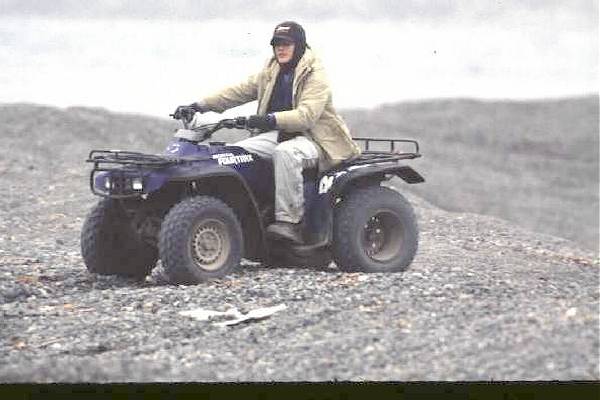
Christopher at Gambell (St. Lawrence Is), Alaska 'four-wheeling' across the beach gravel. |
Being my Son, I'm obviously a 'little' biased, but he's one terrific person!
Now that we have Dad's pride out of the way (for now) I'll 'attempt' to state the objective view! Christopher began his interest in Birds and Animals at the age of four. He has been by my side on virtually every foray covering the entire U.S. from Barrow, Alaska to New Hampshire to Florida to Texas to Arizona and our home state of California, along with many of the states in between. He has been able to master the art of field identification (with his keen eyes and expert ears) of nearly 700 species of North Americas birds as well as all the large mammals. |
| Not stopping there, he is quite knowledgeable on plants, sea life, reptiles and amphibians, and the physical sciences such as Meteorology and Astronomy. |
| His other mastered traits are in the area of computers. At the tender age of 11 he had started his first BBS (Bulletin Board Service) and then by age 15 his first ISP (Internet Service Provider). He is fluent in UNIX, NT, C++, Perl, Java, Ruby, ASP, and CGI scripting (if you are familiar with computer terms!). His typing would amaze you as he types at a blistering speed of over 140 words per minute (yeah, 140 wpm! you think you are watching someone from another planet!!!). |
| He is presently living in Marina Del Rey, CA doing Web page design and Search Engine Optimization software running his own computer business. He is attending college there and expects to continue his degree in Computer Science. He graduated from High School with honors, and scored a 100 percent on his Math SAT test (few individuals do this). |
| Probably our highlight trip thus far was to Alaska in 1997.
Christopher had listened to Dad's stories of all my great Alaska birding trips to Attu, Gambell
and St. Paul Island also in the Bering Sea, Barrow,
etc. for years and had been hoping we could go there together someday so......we shared a special trip
finally. We covered most of the state, visiting Nome, Gambell (on St. Lawrence Island),
up to Barrow (the northernmost inhabited village in North America) on the Arctic Ocean, watching the pack ice
still within a few feet of shore in June!, then to Denali National Park (home of the tallest mountain - Mt.
McKinley - in North America), then down through Anchorage to Seward going
out in to Resurrection Bay, and Homer and then back to Anchorage. Now Christopher has become a phenomenal nature photographer in his own right and to see his website click here: http://www.kiwifoto.com |
A special thanks to my son,
Christopher, who has been a wonderful inspiration.
Not only has he been a fellow photographer but, the greatest asset, strength,
and encourager in attaining the photos we now have in our collection.
His eyes and ears can spot anything!
The number of instances where his timely help, patience and skills have 'paid
off' in a great image are innumerable. Also, for his fine work on helping in
the preparation of this web site and countless hours in preparing the
thumbnail images which are available on this site for you to view.
Thanks Son !
He has now entered the world of Nature Photography himself and excelling at it!!
My Sons Web Page:
http://www.kiwifoto.com
Copyright
©
1996-2025
Monte M. Taylor / All Rights Reserved. 36 USC 380
The Contents and Graphics were created by and copyright owned by Monte M. Taylor
and protected
by U.S. copyright laws. The Contents and Graphics may NOT be used on another
website,
for email attachments, chat sessions, clipart collections, or by any other
means, including copying or saving of digital image files, unless
otherwise expressly written permission was granted by me.